FOOD AI GUIDE
Calorie Tracker for Weight Loss
A calorie tracker cannot guarantee weight loss. Its practical value is helping you keep a more consistent record, notice patterns, and make informed adjustments.
Tracking can make portions and recurring habits easier to see, but it cannot guarantee weight loss or replace individual professional guidance.
CONSISTENCY LOOP
A food log is useful because it shows what repeats
A single meal rarely explains a person’s eating pattern. A record becomes more useful when it shows what happens on ordinary weekdays, rushed mornings, weekends, and restaurant nights. The point of calorie tracking is not to produce a perfect score for one Tuesday. It is to make recurring choices easier to see.
You might notice that coffee drinks are larger than expected, that sauces appear at most lunches, or that a skipped breakfast is followed by a very large dinner. You may find that portions are reasonable at home but much less predictable when eating out. These observations are more actionable than judging one unusual meal.
Look across days, not at one number
One celebration meal, late dinner, or forgotten snack should not become a verdict on the whole routine. Look for repetition. Compare similar weekdays with similar weekdays, and weekends with weekends. A food log is an observation tool, not a moral report card.
For example, a person may log carefully from Monday to Thursday but stop recording on Friday evening. The missing entries are not proof of anything by themselves, but they reveal where the routine breaks. Fixing that gap may teach more than making Monday’s breakfast more exact.
Patterns are often less dramatic than people expect. It may be the same large coffee on three mornings, a handful of snacks while cooking, or a weekend lunch that is never written down. The value of the log is not to turn these observations into blame. It is to show which parts of the day deserve a closer look and which parts are already easy to keep track of.
Consistency beats perfect logging
A consistent record with sensible estimates can be more useful than a precise record that lasts three days. Restaurant meals, shared dishes, and homemade leftovers often cannot be measured perfectly. If every uncertain meal becomes a reason to quit, the log loses its value exactly where it could be most informative.
That does not mean accuracy is irrelevant. Use labels and measured ingredients when available. Review photo estimates. Correct obvious mistakes. The practical balance is to collect the best information you can without making the routine so demanding that it disappears.
Make adjustments small and observable
Do not begin by changing everything. Look for one repeated pattern: oversized weekend portions, sweet drinks, a sauce added automatically, or meals that are never logged because they are inconvenient. Improve the record first, then decide what the pattern actually says.
If dinner is consistently difficult to log, photograph it before eating and review the result afterward. If breakfast repeats, save a verified entry. If takeout is common on workdays, create a simple photo routine. These are tracking adjustments, not promises about a particular weight outcome.
What a realistic week can reveal
Imagine a week with oatmeal at home, a cafeteria lunch, a restaurant dinner, and leftovers. The oatmeal may be easy to record from measured ingredients. The cafeteria meal may need a photo and a portion review. The restaurant dinner may be uncertain because of oil and sauces. The leftovers may vary depending on how much was placed in the bowl.
Seeing those differences helps you choose the right method. It also shows where the largest unknowns live. The answer might be to measure a repeat recipe, use a label, or simply stop skipping the meals that are hardest to describe.
A useful experiment is to change the recording habit before changing the food. Photograph the meals you normally skip for one week, or save the breakfasts you repeat, then look at whether the record becomes more complete. Better coverage can reveal a pattern that was previously hidden without requiring a new target or a rigid rule.
When tracking is not the right tool
Not everyone benefits from detailed calorie tracking. If logging creates excessive burden or makes eating feel more stressful, a simpler record may be more appropriate. If someone needs a precise plan for a health condition or a specific professional goal, that conversation belongs with a qualified professional rather than a generic website.
The useful standard is whether tracking gives you clearer information without taking over the day. It should support awareness, not become another source of pressure.
How a photo can reduce the work
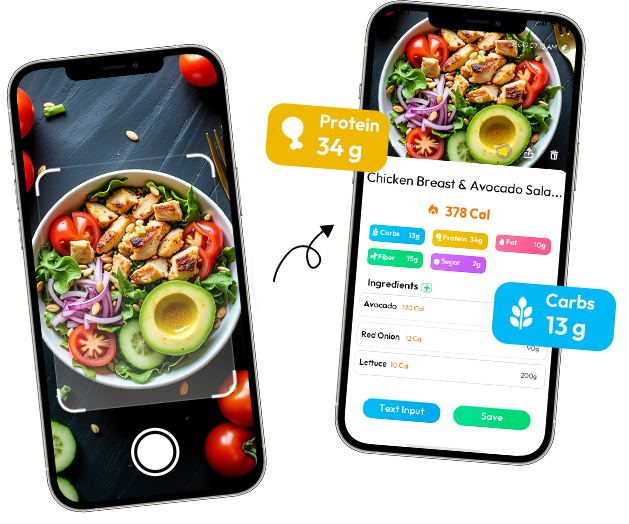
Food AI is most relevant when the meal is visible but tedious to type. A photo can create a starting point for a mixed lunch, a restaurant plate, or leftovers. Review the estimate before saving and use the record to notice patterns over time.
The product does not make decisions for you and it does not guarantee a result. Its practical role is smaller and more useful: reduce the number of meals lost to logging friction so your record reflects more of real life.
Tracking can also reveal a mismatch between effort and information. Someone may spend several minutes weighing breakfast while leaving restaurant dinners unrecorded. The resulting log looks precise but may omit the meals that contribute the most uncertainty. A more balanced routine might use careful measurements for repeat home meals and reviewed estimates for social or restaurant meals.
If you decide to make an adjustment, give it a fair observation period rather than reacting to one day. Note whether the change makes logging easier, whether the same difficult meal still disappears from the record, and whether the pattern you noticed actually repeats. This keeps the process practical and avoids turning normal daily variation into a dramatic conclusion.
Use the record to make the next decision clearer
A useful log does not tell you that one food is good or bad. It shows where your choices are predictable and where the day tends to become unclear. You might decide to photograph takeout before eating, measure a repeat recipe once, or keep a saved breakfast so mornings require fewer decisions.
Those changes are deliberately modest. They improve the quality of the information you collect without turning the log into a daily test. If tracking stops helping, simplify it or pause it. The purpose is clarity and consistency, not punishment.
Even a short note can improve the next review: “large dinner after skipped lunch” or “takeout sauce unknown.” It gives the number a reason and makes patterns easier to recognize without pretending the entry explains everything.
Keep the language of the log neutral. “Restaurant dinner, sauce unknown” is more useful than labeling the meal a failure. Neutral notes make it easier to return to the record and compare similar situations later. If a pattern is worth changing, choose one visible behavior to observe, such as logging the weekend lunch or checking drinks, rather than trying to control every detail at once.
What to carry into your next meal
A food log is a lens, not a verdict. Its value is in making repeated choices easier to notice, while leaving room for the fact that one estimate cannot explain a person’s health or results.
For the relationship between food self-monitoring and weight-management programs, see the USDA Nutrition Evidence Systematic Review. This page does not make a weight-loss promise.
FOOD AI PRODUCT NOTE
Start with the meal in front of you
Food AI can identify visible meal components and provide a calorie and nutrition estimate to review before logging.
Explore the relevant Food AI tool →