FOOD AI GUIDE
Food Tracker for Busy People
Tracking often breaks at work lunch, takeout, or an irregular snack. A lower-friction record is usually more useful than abandoning the day because one meal was difficult to enter.
Use different logging methods across the day. Saved meals handle repeats, quick entries handle simple snacks, and a photo can start a useful record for unfamiliar food.
A REALISTIC DAY OF FOOD TRACKING
Breakfast
Saved repeat meal
Fast because breakfast rarely changes.
Work lunch
Photo estimate
Useful when ingredients are unclear.
Snack
Quick manual entry
Simple packaged item.
Takeout dinner
Photo + review
Mixed meal with several components.
The problem is friction, not knowledge
Most busy people know roughly what they ate. The breakdown happens later, when the lunch was takeout, the meeting ran long, or dinner contained too many ingredients to search one by one. The more decisions a logging system demands at the worst moment, the more likely the meal is skipped.
A useful routine makes different meals easy in different ways. Repeat breakfast does not need the same workflow as an unfamiliar restaurant bowl. A packaged snack does not need a photo if its label is already available.
Use a different method for different meals
Saved meals work well for food that repeats. Manual entry works well for a simple packaged snack or a measured recipe. A label or barcode is useful when the manufacturer provides the information. Photo logging helps when the meal is mixed, unfamiliar, or inconvenient to rebuild.
This is not a contest where one method wins every category. The best routine is the one that leaves a useful record with a reasonable amount of effort.
The useful question is not “What is the most advanced way to track this?” It is “What information can I capture before the next interruption?” A repeat breakfast may need only a saved entry. A lunch assembled from a buffet may need a photo and a note. A small packaged snack may be fully described by its label. Matching effort to the meal keeps the routine from becoming another task competing for attention.
Build defaults before the day gets busy
Decide your defaults in advance. Save the breakfast you make most mornings. Keep a quick entry for your usual coffee. Photograph lunch before you start eating when the ingredients are unclear. Use the package label for a snack. If dinner is takeout, take one clear photo and review the estimate when you have a minute.
Defaults reduce decisions. You are not asking yourself “Which tracking system should I use?” while standing in a queue or joining a call. You already know the next small action.
A realistic workday
At 7:45, breakfast is the same yogurt, fruit, and granola, so the saved meal is quick. At 12:30, a work lunch arrives as a rice bowl with chicken, vegetables, and sauce. A photo captures the meal before the container is mixed together, then the estimate is reviewed for portion and sauce.
At 4:10, a packaged snack is logged from its label. At 8:15, takeout dinner contains several unfamiliar components. A photo creates a starting point, but the user checks whether the sauce was eaten and whether half the side dish remained. Each meal used the method that matched its information.
Reduce the number of decisions
Tracking often fails at transitions: leaving work, travelling, eating with colleagues, or arriving home tired. A short routine helps. Photograph before eating, save repeat foods, keep labels available, and review only the details that materially change the result.
You do not need to rebuild every herb or garnish. Focus on the main food, portion, cooking method, sauces, and drinks. Those decisions make the record more useful without turning dinner into an accounting project.
For a rushed day, leave yourself a recovery path. If you forgot to log lunch, add a brief note while you still remember the main dish and portion. Do not wait until bedtime and try to reconstruct every ingredient from memory. The next meal is a better place to restart the normal routine.
What to skip
Skip the idea that every tiny detail deserves the same effort. If a repeat meal has already been checked, reuse it. If a snack has a clear label, read the label. If an unfamiliar plate cannot reveal its oil or recipe, record a reviewed estimate and move on.
Perfect tracking is a poor default for a busy day because it makes the whole system fragile. A simpler record that survives meetings, travel, and late dinners gives you more to learn from.
Where Food AI helps
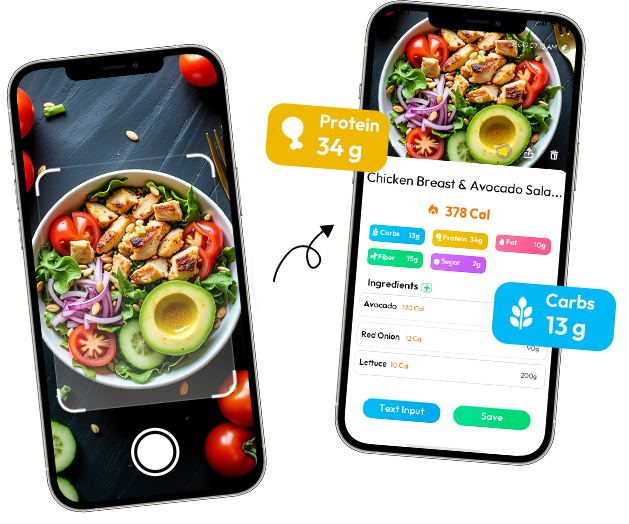
Food AI fits the moments where the food is visible but the database search is the obstacle. It can identify visible meal components and provide a calorie and nutrition estimate for review. That makes it useful for a work lunch, a mixed takeout meal, or leftovers that would otherwise be skipped.
It is still an estimate. Use a label or measured recipe when those are available, and review the photo result before saving. The product’s value is reducing the steps needed to keep a realistic food record.
A busy routine also needs a recovery plan. If lunch was missed, do not wait until the evening to reconstruct every ingredient from memory. Add the simplest honest record you can while the meal is still fresh, then return to your normal default at dinner. One difficult day should not make the whole system feel broken.
The same principle works during travel. Use labels for packaged breakfast items, a photo for a buffet plate, and a short note for a meal shared with colleagues. You may not capture every detail, but you preserve the important context: what kind of food it was, roughly how much you ate, and where the routine became uncertain.
Make the routine easy to restart
There will be days when no method feels convenient. A meeting replaces lunch, a child’s dinner becomes your dinner, or you eat on the way home. Do not turn one missed entry into a lost week. Add a short honest note, use a photo for the next unfamiliar meal, and return to the saved defaults when the schedule settles.
The best routine is not the one with the most features. It is the one you can remember at 12:30 in a noisy café and at 8:15 when you are tired. Keep the action small, review the important details, and let the rest of the day continue.
Keep the important details, leave the rest
A quick record does not need to describe every garnish. It needs to preserve the parts that change the meal: the main food, the portion, the preparation, the sauce, and what was actually finished. That is enough to make an unfamiliar lunch searchable later without asking you to relive the entire meal.
If the same busy moment happens every week, improve the default rather than relying on willpower. Save the repeat meal, keep the label nearby, or make the photo the first action after the plate arrives. Small decisions made in advance are what make a food tracker usable on a genuinely crowded day.
What to carry into your next meal
The routine succeeds when it survives an ordinary messy day. A saved breakfast, a quick photo at lunch, and a simple snack entry can be more useful than an elaborate system used once.
FOOD AI PRODUCT NOTE
Start with the meal in front of you
Food AI can identify visible meal components and provide a calorie and nutrition estimate to review before logging.
Explore the relevant Food AI tool →