FOOD RECOGNITION / EXPLAINED
How AI Food Recognition Works
A meal photo does not jump straight to a calorie number. A useful food recognition system has to work through a chain of smaller questions: what is visible, where one food ends and another begins, how much appears to be there, and which nutrition reference best matches the preparation.
The usual path is image → visible food recognition → portion clues → nutrition matching → user review. Recognition starts the process; it does not make the final result a measured fact.
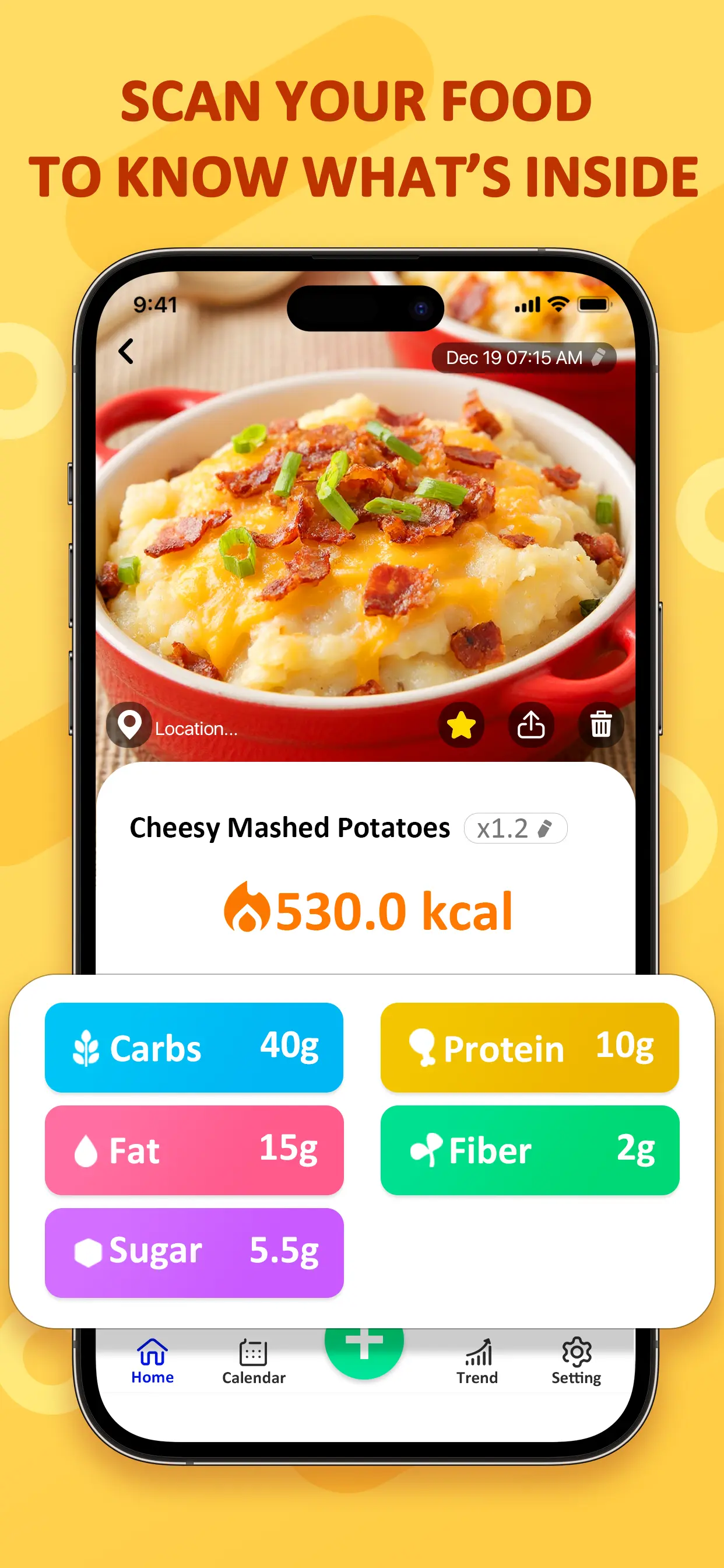
Recognition is the first layer, not the whole answer
When people say an app “recognizes” a meal, they often mean two different things. First, it identifies likely foods in the picture. Then it tries to turn those labels into a useful nutrition estimate. Those are related jobs, but they are not the same job.
A photo of a banana on a plate gives strong visual clues. A bowl of curry with rice, oil, vegetables, and meat asks much more of the system. Even if the broad label is right, the amount and preparation can still be uncertain. Understanding the stages makes the result easier to use: you know which parts to trust quickly and which parts deserve a second look.
“The app recognized my food” and “the nutrition result is exact” are two different claims. The first can be useful while the second still needs review.
Stage one: the image supplies the evidence
Everything begins with the photograph. The image gives the system color, shape, texture, edges, arrangement, and context such as a plate or bowl. A full serving in ordinary light provides more useful evidence than a tight crop that hides the sides.
This is not about making a meal look attractive. It is about preserving the clues that separate foods. The edge of a bowl can help with scale. A visible sauce cup tells a different story from sauce spread invisibly across a dish. A separate piece of chicken is easier to reason about than chicken buried beneath a creamy topping.
Images also carry ambiguity. A dark photo can erase texture. A steep angle can hide the depth of a bowl. A family-style table shot shows what was available, not necessarily the portion one person ate. A recognition system can only work with the evidence in the frame.
Stage two: turning pixels into visible food candidates
The next step is food recognition: finding areas that appear to be food and assigning likely names to them. In a simple plate, that may produce candidates such as grilled chicken, white rice, broccoli, and avocado. In a mixed dish, the visible result may be broader—pasta, curry, sandwich, or stir-fry—because the ingredients cannot be cleanly separated from the surface.
Technical research commonly separates food-image analysis into tasks such as locating or segmenting food, classifying what it is, and estimating its amount. A systematic review of image-based food recognition describes these as connected stages rather than one magical prediction. The review literature is useful here because it makes a plain point: recognizing a category and estimating a portion are separate problems.
Why similar foods create uncertainty
Cut chicken and white fish may share a shape. Tofu, egg, and cheese can look similar after cooking. A red sauce may cover vegetables, meat, or pasta. The system selects a plausible candidate from what it can see; the person who ordered or cooked the meal may know a detail the image cannot provide.
Stage three: estimating portion from a flat image
Once visible foods have been identified, the system still has to estimate how much is there. A photograph is two-dimensional, while food has height, density, and weight. A bowl that looks half full from one angle may be packed more deeply than it appears. A large plate can make the same serving look smaller than it would on a small plate.
Portion estimation may use visual scale, the size and shape of the dish, area in the frame, and other spatial cues. Multiple views or reference objects can provide more information, but ordinary meal logging usually begins with one casual photograph. Research reviews point out that occlusion, mixed ingredients, dish geometry, and assumptions about food height can introduce errors in volume estimation. A review of food classification and volume estimation treats recognition and quantity as distinct challenges for exactly this reason.
This is why the right user question is not “Did it recognize rice?” but “Does the suggested amount resemble the rice I actually ate?” That check is often more valuable than retaking the same photo from a slightly different angle.
Stage four: matching food to nutrition information
After the system has a food name and a portion clue, it needs a nutrition reference. The preparation matters here. “Potato” could describe boiled potato, roasted potato with oil, or fries. “Yogurt” could mean plain yogurt, sweetened yogurt, or yogurt topped with granola. A broad food label is only the beginning of the match.
The nutrition stage combines the likely food identity, estimated amount, and preparation assumptions. That is why a scan can look sensible while still needing correction. The image may show chicken clearly, but it may not reveal whether the chicken was breaded, how much oil was used, or whether the sauce was eaten.
A recent scoping review of AI-based dietary assessment describes this wider chain—from food recognition to portion or volume estimation and then representative nutrient values—while also noting that real-world images are more varied than controlled datasets. The review of AI dietary assessment is a useful reminder not to collapse every stage into a single “AI accuracy” number.
Why mixed meals need more judgment
Mixed meals are difficult because the information is layered. In a curry, sauce may hide the amount of meat and vegetables. In a casserole, the surface says little about the proportions underneath. In a burrito or sandwich, the main ingredients are enclosed. In fried rice, the rice is visible but oil and small additions are distributed throughout.
There is also a boundary problem. On a separate plate, chicken and rice have visible edges. In a stir-fry, the ingredients overlap and the system has to decide whether it is looking at several components or one prepared dish. This is not a reason to discard the scan. It is a reason to treat the result as an organized starting point rather than a complete recipe reconstruction.
Clearer signal
Separate foods, good light, full serving, ordinary angle.
Less visible
Covered fillings, mixed sauces, bowl depth, hidden cooking fat.
Best response
Review the suggested foods and add the details you actually know.
What should you review after recognition?
Review is not a technical chore added at the end. It is the part that reconnects the image with the real meal.
- Food identity: Is the main item actually chicken, fish, tofu, or something else?
- Meal components: Are the side, drink, topping, and dip represented?
- Portion: Does the amount look like the serving you ate?
- Preparation: Was it grilled, fried, breaded, creamy, sweetened, or cooked with oil?
- Hidden information: Is there a filling, dressing, butter, or sauce outside what the camera can see?
These checks are deliberately ordinary. They use the diner’s knowledge instead of pretending a picture contains the whole story.
Two examples of the pipeline in practice
Example one: chicken, rice, and vegetables
The image makes the food categories fairly clear. Recognition can suggest chicken, rice, and vegetables. Portion estimation still has to judge how full the bowl is. Nutrition matching must decide whether the chicken is grilled or breaded and whether the vegetables were cooked with oil. The result becomes more useful when the user checks those three details.
Example two: a takeaway curry
The photo may show rice, a curry, and a garnish. It cannot reliably show how much coconut milk, oil, or meat is inside the curry. Recognition can organize the visible meal, but the menu description or restaurant information may be better evidence for ingredients. If neither is available, the photo still gives a workable record—provided its uncertainty is not hidden behind a falsely exact number.
When another source is better
Food recognition is not meant to replace every other way of logging food. A readable package label is usually stronger for a sealed snack or drink. A measured ingredient list is stronger for a recipe you cooked and weighed. A saved meal is faster for a breakfast that has not changed for months.
A photo becomes valuable when the meal is unfamiliar, mixed, served away from home, or too inconvenient to rebuild by hand. If you want the product-focused version of this workflow, visit the AI Food Scanner page. If the main question is calories rather than recognition, the photo calorie guide goes deeper into reviewing an estimate.
See the recognition step in practice
Food AI starts with the foods visible in your meal photo, then gives you a result to review before it becomes part of your food record.
Explore AI Food Scanner →